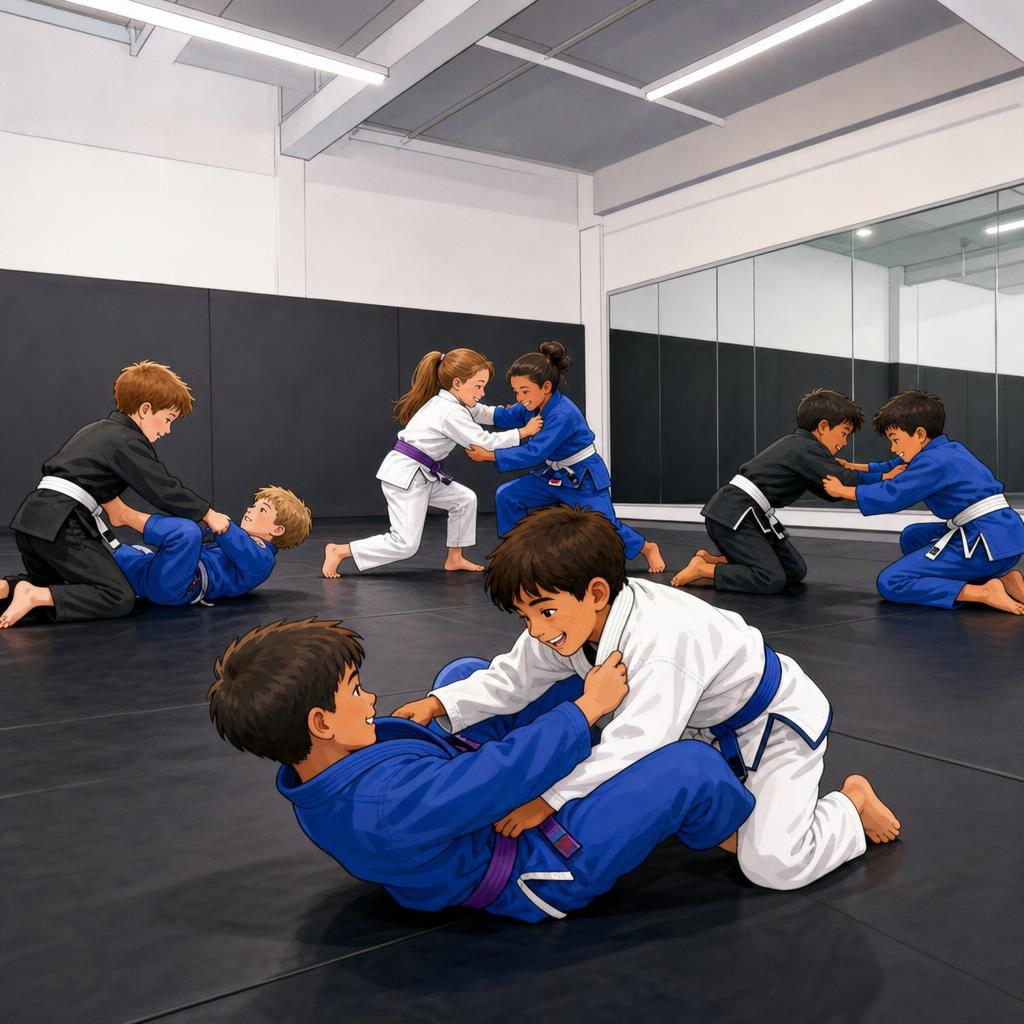
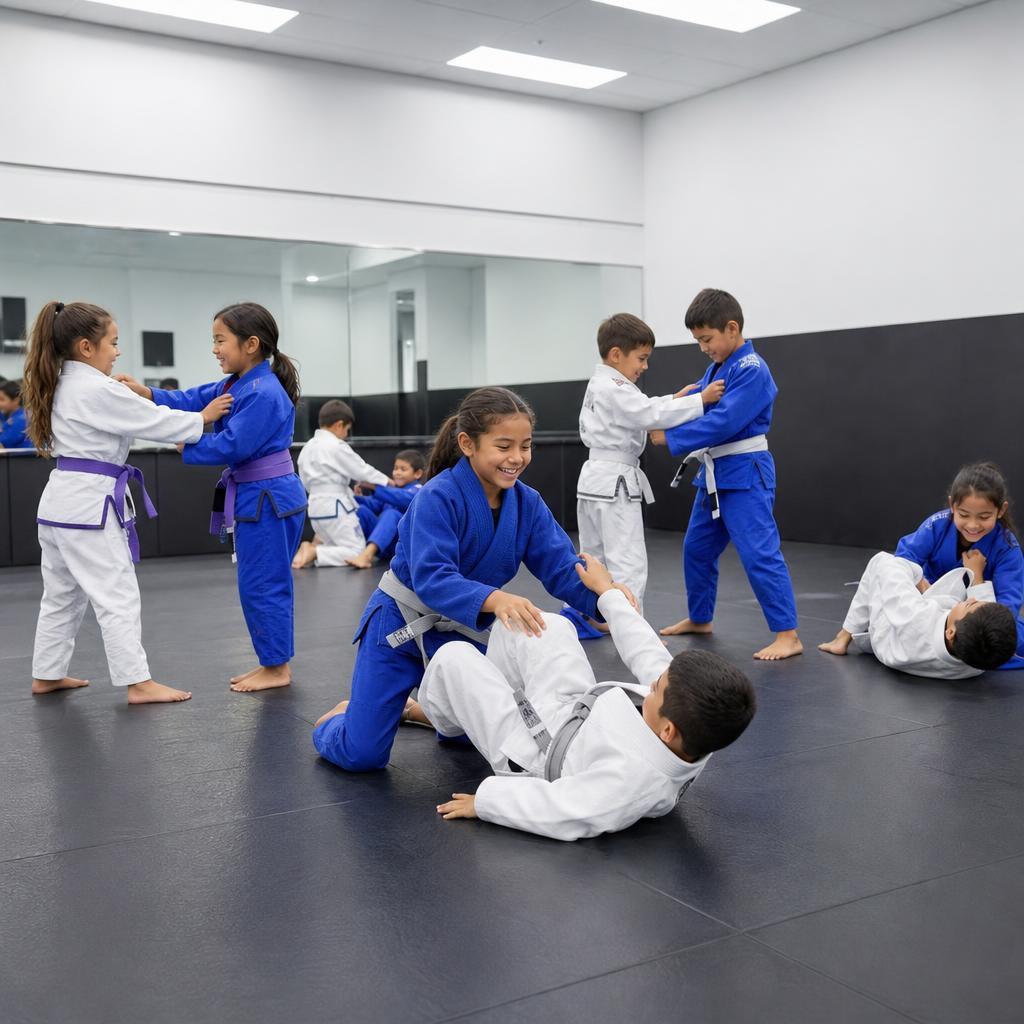
In a world where video games and screens dominate children’s free time, finding an engaging and beneficial activity for kids is crucial. Brazilian Jiu-Jitsu (BJJ) not only keeps kids physically active but also instills discipline and boosts confidence. It’s more than just a martial art—it’s a holistic approach to developing essential life skills. At Aeon BJJ, we’ve seen countless kids transform, leaving both parents and children wondering why they hadn’t started sooner.
Building Discipline Through Structure and Routine
One of the most significant benefits children gain from BJJ is the increased discipline that comes from regular practice. Jiu-Jitsu is deeply rooted in tradition and respect; it involves following a strict set of dojo rules and understanding the hierarchy within a class. This structure is not just a display of order, but a system designed to promote discipline from the earliest stages of training.
The Role of Routine in Skill Development
Children thrive on routine, and BJJ provides structured class times and predictable sequences that they can count on. Regular classes at Aeon BJJ incorporate warm-ups, drilling techniques, and sparring, allowing kids to see the results of their discipline through gradual improvement. When a child adheres to these routines, they develop patience and perseverance, qualities that are transferable to all areas of their life.
Instruction Beyond the Mat
The lessons learned aren’t confined to the mat. Kids understand that the work habits they cultivate in class apply to their school and home life. They learn to respect authority figures, listen carefully, and follow directions, while also gaining a sense of responsibility for their actions—whether it’s returning gym equipment or supporting a classmate during practice.
Confidence Through Understanding and Achievement
Achieving success in BJJ isn’t instantaneous; it comes from mastering techniques such as the guard pass or the elusive rear naked choke. Learning these methods gives children a profound sense of achievement. Every new stripe or belt earns them recognition, boosting their self-esteem substantially.
Realizing Potential
In the beginning, a child might be apprehensive about rolling with a partner. But over time, they learn that size and strength are not the sole determinants of success in BJJ; rather, it is the understanding and application of technique. This realization empowers children, as they discover their potential to excel against the odds—a valuable lesson in life beyond the dojo.
Encouraging Positive Self-Perception
Naturally, as kids become more proficient, they experience a noticeable shift in self-perception. They walk taller, speak more confidently, and become more willing to tackle new challenges. This newfound assurance positively affects their interactions in school and social settings, where confidence can sometimes make all the difference.
Social Skills and Community Engagement
BJJ classes are an excellent avenue for developing social skills and making new friends. Unlike team sports, which often emphasize competition, the spirit of community in BJJ fosters a supportive environment where kids learn to value cooperation over confrontation.
Team Spirit in an Individual Sport
While BJJ is an individual endeavor, success often comes from the support of peers. Training partners guide each other, offering encouragement and constructive feedback. At Aeon BJJ, we promote an inclusive atmosphere where kids understand that their success contributes to the overall progress of the group, creating a unique blend of individual achievement and team spirit.
Bridging Cultural Gaps
BJJ attracts individuals from all backgrounds, providing children with a canvas to learn about different cultures, fostering mutual respect and understanding. The friendships made on the mat often transcend cultural boundaries, strategically enriching their worldview in a multi-cultural society like London.
Tactical Techniques and Real-Life Applications
Parents are often looking for activities that are not only fun but safe and practical. BJJ fits this bill perfectly, as it equips children with effective self-defense skills tailored to real-world situations.
Practical Self-Defense
BJJ teaches children how to protect themselves without resorting to violence. For instance, the rear naked choke, which can be mastered by following our Step-by-Step Guide, is a technique focused on control rather than causing harm. Kids learn how to apply pressure thoughtfully and are taught when it’s appropriate to use what they’ve learned, emphasizing the importance of safety and responsibility.
#### Table: Correct Form vs. Common Mistakes in BJJ
| Technique Step | Common Mistake | Correct Form |
|---|---|---|
| Grip Placement | Weak hand grip | Firm grip with elbows in |
| Body Positioning | Too far from opponent | Close and aligned with the opponent’s center of mass |
| Pressure Application | Rushed, uneven pressure | Controlled, consistent pressure |
| Guard Passing | Poor posture leading to sweeps | Strong posture with back straight |
What Our Students Say — 5★ | Based on 95 Reviews
★★★★★
“Incredibly warm environment for anyone wanting to try bjj. The instruction is world class and the team has a family feel.”
— Chris
Encouraging a Healthy Lifestyle
BJJ not only benefits the mind but also the body. Regular training naturally promotes physical fitness in a context that kids enjoy, preventing sedentary habits and encouraging a healthy lifestyle.
Strength and Conditioning
BJJ classes at Aeon BJJ incorporate a wide range of physical exercises that develop strength, flexibility, and endurance. Kids improve their core strength, agility, and balance through engaging drills, which become increasingly challenging as their skills improve.
Emotional Resilience
Physical fitness goes hand-in-hand with emotional well-being. As the saying goes, “a healthy body fosters a healthy mind.” Jiu-Jitsu provides a constructive outlet for stress, helping children learn to manage their emotions efficiently—a skill set that can significantly contribute to their ability to handle teenage and adult life’s ups and downs.
Key Takeaways
- The structured routine of BJJ fosters discipline that extends beyond the dojo.
- Mastering BJJ techniques boosts children’s confidence and self-esteem.
- BJJ promotes social interaction, teamwork, and cultural awareness.
- Children acquire practical self-defense skills in a safe environment.
- Regular training encourages physical fitness and emotional resilience.
FAQ
What age is appropriate for children to start BJJ?
Aeon BJJ offers youth classes suitable for children as young as four years old. Starting at a young age allows them to develop discipline and confidence early on.
How can BJJ help my child in school?
BJJ instills discipline and focus, which can improve a child’s concentration and performance in school. It also teaches respect and listening skills, which are valuable in a classroom setting.
Is BJJ safe for kids?
Yes, BJJ is safe for children. It emphasizes technique over strength and focuses on control and protection, minimizing the risk of injury. At Aeon BJJ, safety is our top priority.
How does Aeon BJJ support new members?
We offer a free trial class for new members to experience the benefits firsthand. Our experienced instructors are dedicated to providing a supportive and encouraging environment.
How does BJJ differ from other martial arts?
BJJ is centered on ground fighting techniques, making it unique compared to striking martial arts. It levels the playing field by allowing skill to overcome size and strength, teaching children that technique is key.
Brazilian Jiu-Jitsu is more than just a martial art for kids—it’s a path to becoming well-rounded individuals. By engaging in BJJ at Aeon BJJ, children learn invaluable life skills, from discipline and confidence to empathy and resilience, setting them up for success in numerous aspects of their lives.