

In the realm of Brazilian Jiu-Jitsu, many positions promise mastery and defense against larger opponents. Yet, few are as versatile and essential as the Spider Guard. This technique has taken center stage in modern BJJ competitions and training, influencing both amateur and professional fighters alike. Spider Guard is celebrated for its dynamic control and sweeping potential, making it a must-have skill in any serious practitioner’s repertoire.
Understanding the Spider Guard Fundamentally
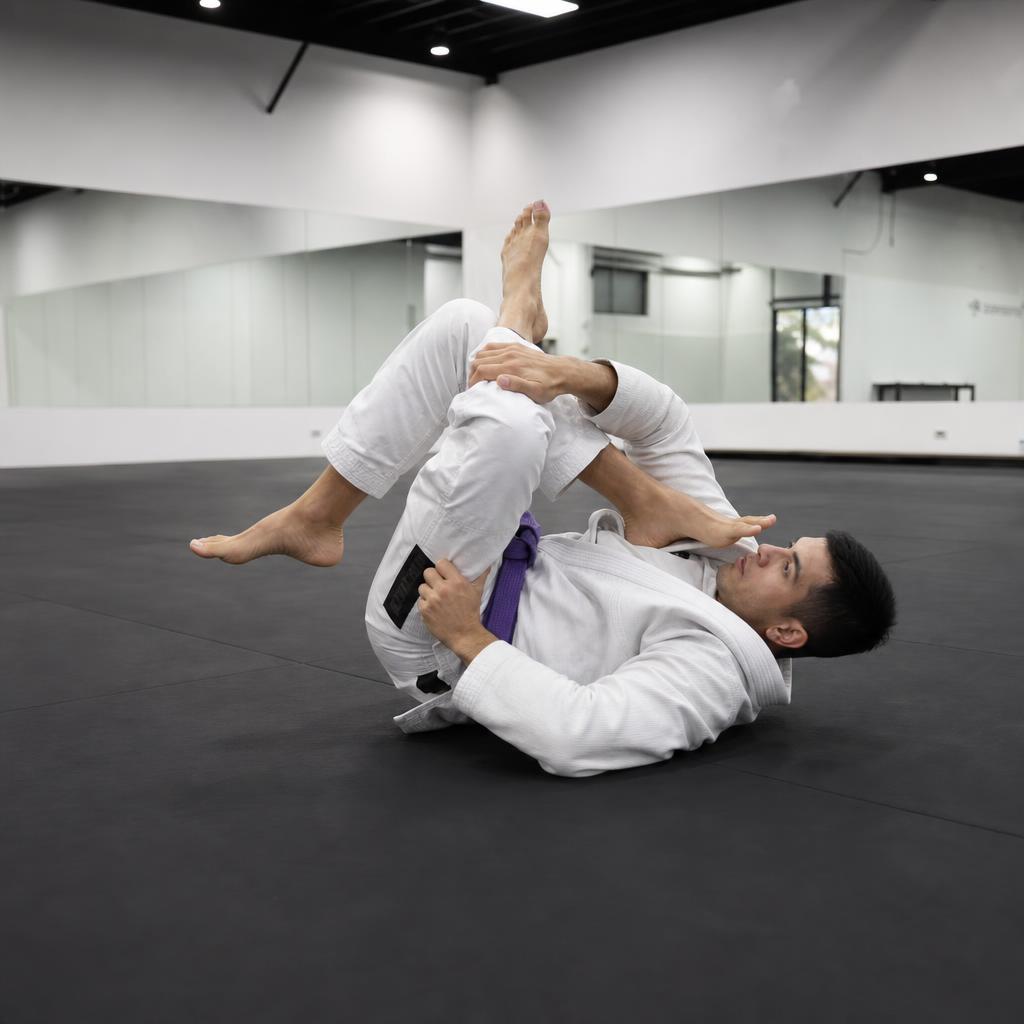
The Spider Guard is a position that involves grabbing your opponent’s gi sleeves and placing your feet on their arms. This position appears deceptively simplistic, but in reality, it’s a complex position that requires strategic grips, balance, and leverage. For practitioners at Aeon BJJ in London, mastering Spider Guard can greatly enhance their grappling performance, especially given the unpredictability it introduces into matches.
Traditional vs. Modern Spider Guard
Historically, the Spider Guard was primarily a defensive stance, giving practitioners time to strategize or catch their breath. In contrast, modern applications of the Spider Guard are far more offensive and dynamic. This evolution has been driven by jiu-jitsu innovators who continuously refine techniques. As a result, today’s fighters are using Spider Guard not just to control but to transition fluidly into sweeps or submissions.
For a deeper dive into the nuances and evolution of this technique, Cobrinha BJJ’s comprehensive guide on gi guard offers valuable insights and tactical advancements in Spider Guard.
Key Techniques and Variations Within the Spider Guard
The Spider Guard offers several variations, each with unique benefits and applications. Understanding these can significantly bolster your BJJ arsenal. Among these, the classic setup involves pinning an opponent’s sleeve while placing one foot on the bicep, using the other foot for hooks or leverage against the hips.
Lasso Spider Guard
One popular variant is the Lasso Spider Guard, which introduces an arm entanglement to limit the opponent’s movement. By looping a leg over the opponent’s arm, this position provides immense control, setting up both sweeps and submissions effectively. It’s particularly useful against opponents who rely heavily on explosive movement to escape from traditional Spider Guard positions.
Overhead Sweep
Another potent move, the overhead sweep, utilizes the Spider Guard for transitioning into a highly offensive position. By controlling both sleeves and swiveling the hips, a practitioner can leverage their legs to flip the opponent over. This move not only disrupts the opponent’s balance but often lands you in a favorable top position, ideal for gaining points or setting up submissions in competitions.
Training Tactical Advice: Step-by-Step Guidance
Adopting the Spider Guard requires dedicated practice, and for every student at Aeon BJJ, there are specific steps to refine these techniques effectively.
1. Grip Strengthening
Focus on strengthening your grip; use gi grips often during drills. Strong grips enable better control and transition possibilities when employing the Spider Guard.
2. Hip Mobility Drills
Develop a routine of hip mobility exercises. Flexibility in your hips is crucial for maintaining the spider position and transitioning between sweeps and submissions.
3. Partner Drills with Variations
Regularly train with various partners to simulate different body types and strategies. Practice transitioning between Spider Guard variations like Lasso and Overhead Sweep.
Overcoming Common Challenges in Spider Guard
Even seasoned practitioners face challenges with Spider Guard. A common issue is losing grip under pressure, which can be mitigated via regular grip endurance training—something emphasized in our Adult Classes – Aeon BJJ sessions. Other challenges include transitioning smoothly into sweeps or submissions, which often stems from a lack of understanding the opponent’s weight distribution.
Solutions for Beginners and Advanced Practitioners
For beginners, focusing on grip and foot placement is key. Attend as many classes as possible to expose yourself to different opponents and styles. For advanced practitioners, concentrate on refining transitions into sweeps seamlessly, utilizing even subtle shifts in the opponent’s posture for your advantage.
Here’s a simple comparison between beginner and advanced approaches:
| Beginners | Advanced Practitioners |
|---|---|
| Focus on grip strength and foot placement. | Refine transitions and submissions from Spider Guard. |
| Attend classes to practice on diverse opponents. | Analyze opponent’s weight distribution for tactical advantage. |
| Stick to basic positions initially. | Experiment with variations such as De La Riva integration. |
| Join classes that emphasize fundamental drills. | Engage in situational drills replicating high-pressure scenarios. |
Integrating Spider Guard into Competition Strategy
When preparing for competition at Aeon BJJ, utilizing the Spider Guard can serve as a differentiator on the mats. This approach enables practitioners to control the pace and flow of a match, while also setting up unexpected sweeps or submissions.
Building Confidence and Agility
Building competence with the Spider Guard during competition prep heightens both confidence and adaptability. Practitioners should engage in mock competition matches to trial these tactics under simulative stress, ensuring readiness when stakes are high.
Incorporating techniques like the Lasso or switching to De La Riva when Spider Guard setups falter are crucial for maintaining dominance. Rated 5★ by 95 members on Google, Aeon BJJ ensures learning these variations is part of the curriculum, preparing students comprehensively for competitive endeavors.
For those looking to master related skills or enhance their overall combat sports performance, visiting Monarchy MMA’s Muay Thai tips can provide complementary striking skills useful in BJJ tournaments with mixed disciplines.
Key Takeaways
- Spider Guard is a versatile BJJ position, evolving from defensive to dynamic offensive use.
- Diverse techniques, like Lasso and Overhead Sweep, enhance its effectiveness.
- Grip strength and hip mobility are critical for success with Spider Guard.
- Beginners should focus on foundational aspects; advanced practitioners refine transitions.
- Incorporating Spider Guard into competition strategy provides tactical advantages.
What Our Students Say — 5★ | Based on 95 Reviews
★★★★★
“Aeon Bjj is fantastic, I am so glad I found this club. My confidence has grown since training and I put this down to the people at Aeon.”
— Elisha
FAQ
How do I improve my grip for Spider Guard?
Strengthen your grip by incorporating specific exercises like towel pulls and grip holds into your training routine. Also, make use of gi grips during regular drills and sparring sessions to gradually build endurance.
What are some common mistakes when using Spider Guard?
Common mistakes include inadequate grip strength, poor foot placement, and failure to maintain control over the opponent’s posture, which can be rectified through focused drills and consistent practice.
How can Spider Guard benefit beginners in BJJ?
Spider Guard helps beginners learn to control opponents and understand leverage principles, providing an entry point to develop broader skills in BJJ, especially when learning positions and defending against various attacks.
Can I use Spider Guard in no-gi BJJ?
While it’s primarily a gi technique, aspects of Spider Guard can influence no-gi strategies, though they require adaptation due to the lack of grips, focusing instead on hooks and positioning.
What role does hip mobility play in executing Spider Guard?
Hip mobility is crucial as it allows practitioners to adjust their guard positions, transition quickly into sweeps or attacks, and maintain control over opponents effectively.
Pingback: Discover the World of BJJ in Kuala Lumpur - Cobrinha Brazilian Jiu-Jitsu & Fitness
Pingback: Embarking on Your Journey with Brazilian Jiu Jitsu - Cobrinha Brazilian Jiu-Jitsu & Fitness