
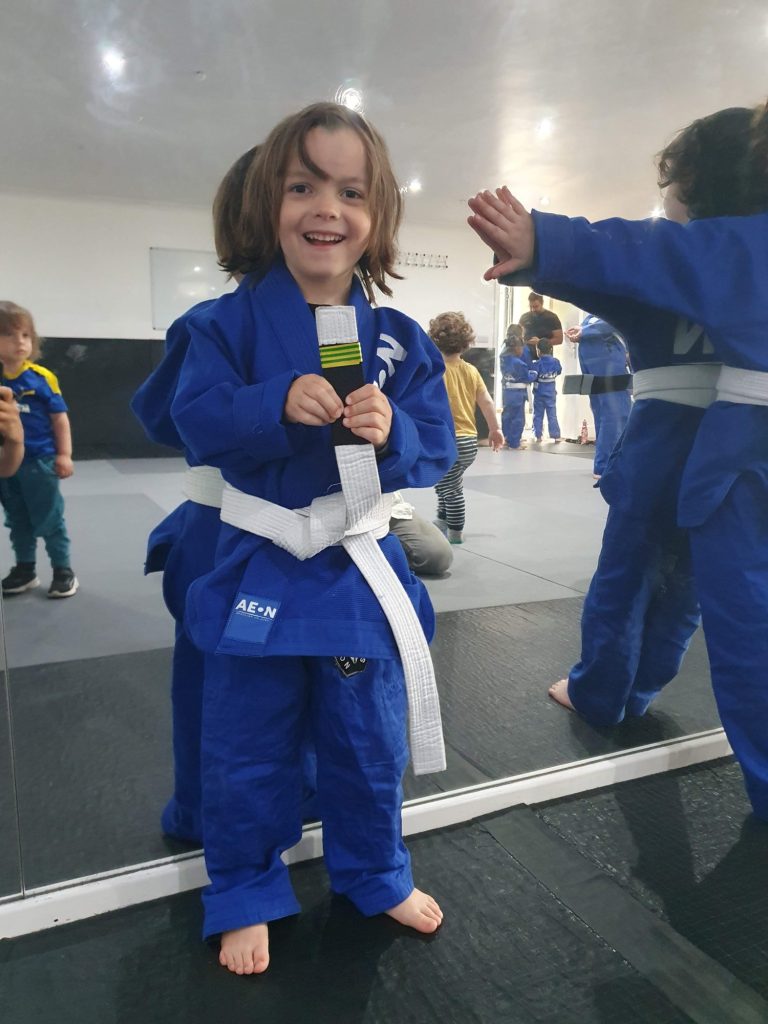
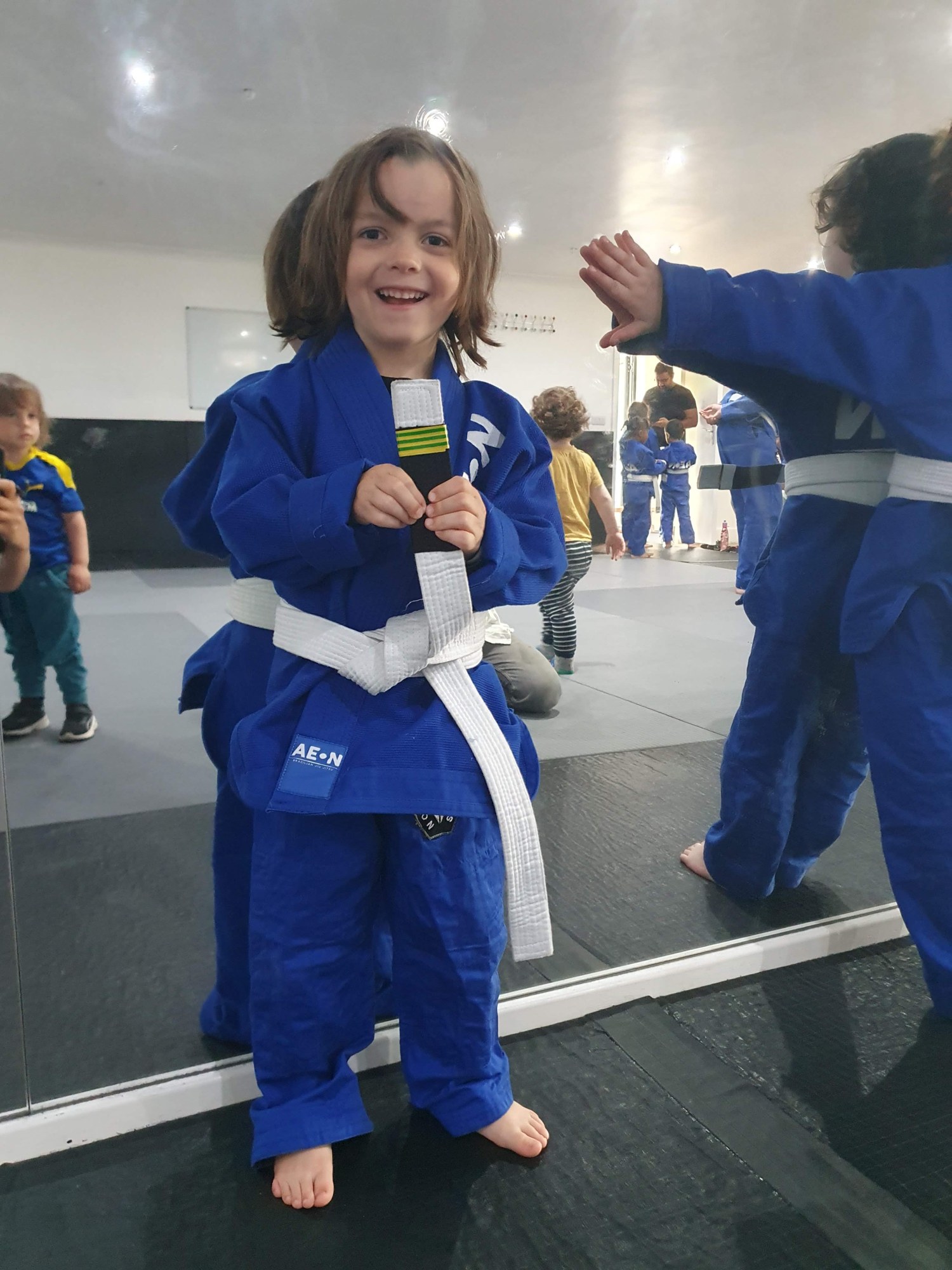
Did you know that the Brazilian Jiu-Jitsu (BJJ) belt system for kids is not just about different colored belts? It’s a time-tested method that instills discipline, character, and a love for the art among children. For parents and young practitioners, understanding this belt system is key to nurturing a lifelong journey in martial arts. At Aeon BJJ in London, where we hold a reputation of 5★ as rated by 95 members on Google, we take pride in guiding our students through the intricacies of this thrilling sport.
The Structure of the kids BJJ Belt System
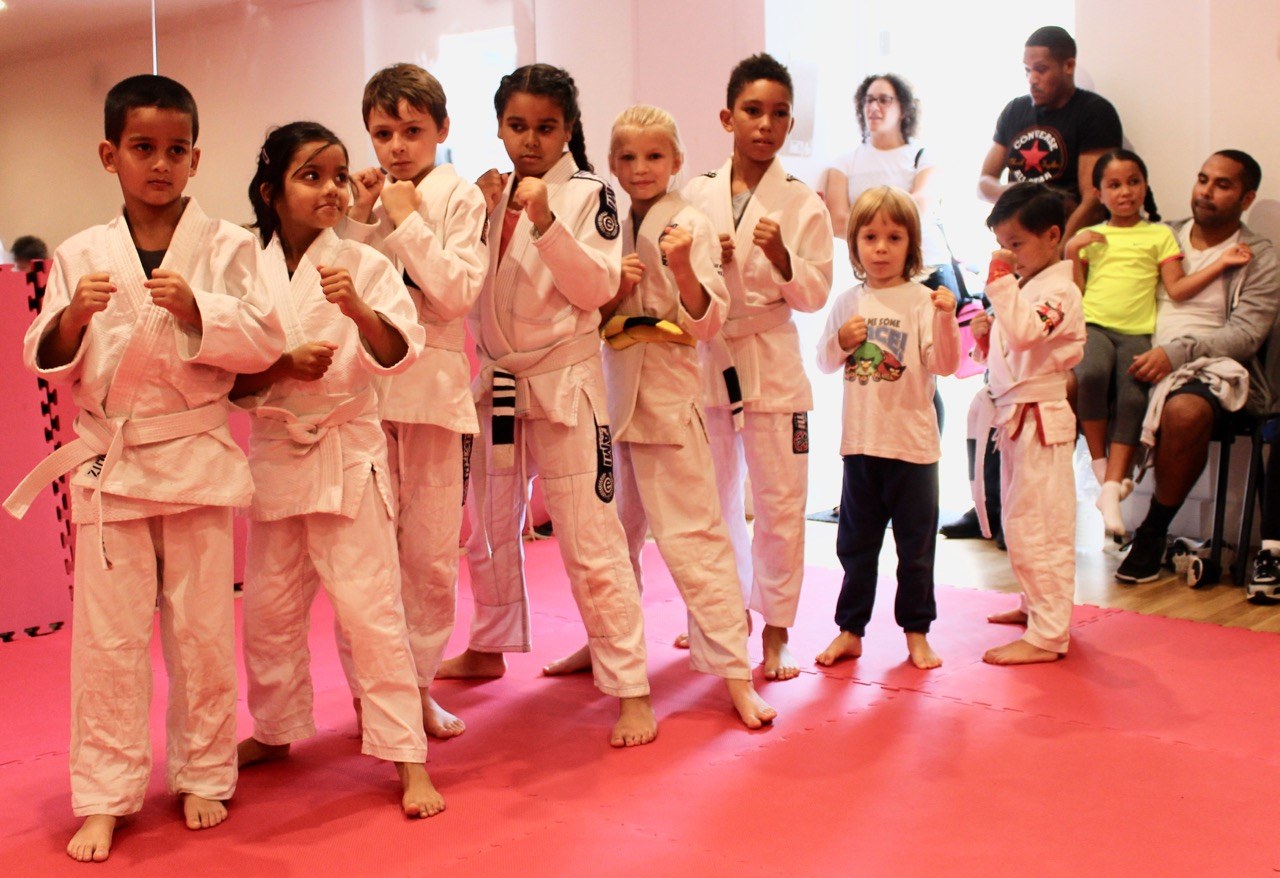
The BJJ belt system for kids differs significantly from the adult progression. It is designed to cater specifically to the developmental stages and learning capabilities of young children. Where adults may progress through white, blue, purple, brown, and black belts, children have a broader spectrum of colors.
White to Gray
The journey typically begins with the white belt. This is a time of learning and adaptation, where children become familiar with the core concepts of BJJ, such as basing, posture, and basic submissions. The next step is the promotion to gray belts, with the inclusion of white, solid gray, and gray with a black stripe combinations. This phase emphasizes reinforced learning.
Moving to Yellow
Transitioning to the yellow belt stage is significant, as it represents a deeper commitment to the sport. At Aeon BJJ, this transformation is encouraged through customized training plans that align with each child’s progress. The yellow belt stage also includes variations, such as yellow with white stripes, solid yellow, and yellow with black stripes, signifying intermediate proficiency.
Advancing to Orange and Green
Beyond yellow, children may advance to the orange belt, which includes further gradations: orange with white, solid orange, and orange with black. Finally, the green belt marks the pinnacle of the kids’ BJJ belt journey. This stage demonstrates advanced understanding and skillset, preparing students for the transition to adult belts in the future.
Understanding the Importance of Striping
Stripes on a child’s belt symbolize incremental progress between belt colors. They serve as motivators and indicators of the child’s developing skill level.
Earning Stripes
Stripes are usually awarded based on a combination of class attendance, skill acquisition, and display of character traits such as leadership and sportsmanship. At Aeon BJJ, our instructors, including Eamonn, Tariq, Sam, Dee, and Dan, work closely with students to ensure they understand the significance of earning each stripe.
Differences from Adult Belt Progression
While both kids and adults focus on mastering techniques, children’s progression heavily emphasizes incremental achievements. This approach helps maintain motivation and provides frequent milestones, which are essential for younger practitioners.
Technique Focus at Each Belt Level
Understanding what each belt level entails helps in goal setting and provides a roadmap for success.
White to Gray Techniques
At this foundational stage, children learn basic BJJ techniques such as guard positions, simple escapes, and the fundamentals of base and balance. Drills include variations of guard passing and positional control exercises.
Yellow Belt Techniques
With more experience, yellow belts start learning more intricate techniques. These include combinations like stacking guard passes and the introduction to submissions such as the armbar. Students begin to flow through techniques in a more connected manner, increasing their tactical comprehension.
Knowing When Your Child is Ready for Their Next Belt
Determining when a child is ready for the next belt can sometimes be challenging. While development can seem inconsistent due to growth and child’s interests, there are several indicators.
Skill Consistency
Look for consistent application of learned techniques during sparring and drills. For example, a child demonstrating good guard retention and passing skills consistently during practice is a strong indicator of readiness for promotion.
Emotional and Mental Growth
Development in maturity and focus, alongside technical skill, is just as important. Children who can handle competition nerves or disappointment gracefully show readiness for new challenges.
For more insights on how children can transition effectively between belt colors and the overall effect these colors have on development, see the Youth Classes – Aeon BJJ.
Common Challenges in the Kids BJJ Journey
Every child’s experience in BJJ is unique, but some challenges are common. Here, we compare some of these challenges with strategies to overcome them.
| Challenge | Strategy to Overcome |
|---|---|
| First Class Nerves | Prioritize making friends and learning basics over performance. Parents can take advantage of a free trial class at Aeon BJJ to help their child ease into the sport. |
| Coping with Competition | Frame competitions as learning opportunities rather than win-or-lose scenarios. |
| Dealing with Plateaus | Encourage exploration of new techniques and inquiring into instructors like Instructors – Aeon BJJ. |
| Avoiding Burnout | Balance BJJ with other activities; remember fun should remain the core objective. |
Key Takeaways
- The Kids BJJ belt system is designed to align with developmental stages and keep young learners engaged.
- Stripes offer motivation and highlight gradual progress in a child’s BJJ journey.
- Technique focus varies at each belt, emphasizing fundamental skills for beginners and more complex movements at higher levels.
- Indicators for belt promotions include consistent skill application and emotional maturity.
- To overcome common challenges, focusing on fun, encouragement, and strategic planning is key to sustaining your child’s interest in BJJ.
What Our Students Say — 5★ | Based on 95 Reviews
★★★★★
“Aeon Bjj is fantastic, I am so glad I found this club. My confidence has grown since training and I put this down to the people at Aeon.”
— Elisha
FAQ
What is the starting belt for kids in BJJ?
The starting belt for kids in BJJ is typically the white belt. This is where they learn the basic positions and movements that form the foundation for their skills.
How long does it take for a child to earn a new belt?
The time it takes varies depending on the child’s dedication, frequency of classes, and skill acquisition. On average, promotions occur every 6 to 12 months.
Can a child compete before they are a high-ranking belt?
Yes, children can compete at any belt level. Competitions can provide valuable experience and help reinforce techniques learned in class, regardless of their belt color.
How are belts tied into the overall development of a child?
Belts and the progress they signify can boost a child’s confidence, discipline, and provide a visual representation of their hard work and dedication.
What if my child doesn’t want to move up a belt?
If a child is not inclined to move up, no pressure should be applied. It’s essential to maintain the enjoyment factor, ensuring they aren’t overwhelmed by expectations.
For those seeking further understanding of how external influences can impact a BJJ practitioner’s journey, BJJ.ee’s article on the consequences faced by a BJJ black belt for misconduct covers this in detail, offering insights into the importance of character both on and off the mat.